In 2024, assisted living reached a national median cost of $70,800 per year, which is about $5,900 per month, and that number continues to rise each year. When many seniors want to age in place, families are asking whether a one-time smart home setup plus modest monthly costs can be a safer and more affordable alternative.
Key Takeaways
| Question | Short Answer |
|---|---|
| Is a smart home cheaper than assisted living? | For many seniors with low to moderate care needs, smart home devices plus limited in‑home help often cost far less per year than assisted living fees. |
| What are the main cost drivers in assisted living? | Room and board, 24/7 staffing, and bundled services drive the typical $70,800/year national median cost of assisted living. |
| What smart home devices matter most for cost savings? | Fall detection, home safety planning, security, smart lighting, voice control, and medication reminders reduce risk and may limit the need for higher-cost facility care. See our smart safety devices guide for examples. |
| Can smart homes replace caregivers completely? | No. Technology supports safety and routines but does not replace hands‑on personal care when needed. |
| How do we start planning for aging in place with tech? | Begin with a basic home safety review, then layer in essential devices. Our step‑by‑step start-building guide walks families through this process. |
| Where can we learn the basics of smart home terms? | We keep jargon to a minimum, but if a term is confusing, our plain‑language tech explained hub can help. |
Interactive Cost Savings Calculator
Use our interactive tool below to estimate your potential savings. Adjust the values for smart home devices and assisted living fees to see a personalized comparison over time. You might be surprised by how much difference a single year makes.
1. Smart Home vs. Assisted Living: How Families Really Compare Costs
When families compare smart homes with assisted living, they are usually balancing budget, safety, and independence for an older adult living alone. We find it helpful to think about three cost categories, one‑time setup, ongoing monthly tech and home expenses, and the potential cost of injuries or emergencies if safety is not addressed.
Assisted living bundles many of these items into one large monthly payment, while a smart home approach spreads out smaller costs over time. This can make it easier to plan and avoid sudden jumps in spending that are common when moving into a facility.
| Option | Typical Cost Pattern | Who It Fits Best |
|---|---|---|
| Assisted Living | High, predictable monthly fee, often $5,000–$7,500/month. | Seniors needing daily help with multiple activities of daily living. |
| Smart Home Aging in Place | Lower one‑time setup plus modest monthly subscriptions or internet. | Seniors who are mostly independent but need safety supervision and reminders. |
Our role is to help you design a smart home setup that targets the highest risks first, falls, medication errors, poor lighting, and security gaps, without over‑buying devices you do not really need.
2. Assisted Living Costs Today: What You Are Really Paying For
Assisted living fees cover housing, basic utilities, meals, staffing, some activities, and varying levels of personal assistance. The national median of $70,800 per year is only a starting point, since many metro areas cost more.
In high‑cost states like California, average assisted living runs closer to $88,200 per year, which can quickly deplete savings if someone stays several years. Families also need to budget for possible future transitions to higher‑care settings such as nursing homes, which can exceed $111,000 per year for semi‑private care.
- Room and board, usually a private or semi‑private apartment.
- 24/7 staff presence and emergency response within the building.
- Help with bathing, dressing, or medications, sometimes at extra cost tiers.
- Housekeeping, laundry, and group activities.
These services are valuable for seniors with higher care needs, but many older adults who are still largely independent may not use everything they are paying for, which is why we see strong interest in aging safely at home with technology.
3. What A Smart Home Aging-in-Place Setup Typically Costs
A smart home setup for an older adult usually has its highest costs early, devices, installation help if needed, and sometimes a one‑time consultation or home assessment. After that, most families face modest monthly costs for internet and a few low‑cost subscriptions, far below assisted living fees in many cases.
Our budgets vary by home size and needs, but families commonly spend a one‑time range of a few hundred to a few thousand dollars on core devices, then less than a typical monthly facility fee on ongoing services. The goal is to get strong safety coverage without creating complicated technology that is difficult for seniors to use.
| Smart Home Cost Category | Typical Range | Notes |
|---|---|---|
| One‑time devices | $300–$3,000+ | Depends on how many rooms, sensors, cameras, and voice assistants are installed. |
| Internet & subscriptions | $40–$150/month | Home internet plus any optional cloud or monitoring services. |
| Optional in‑home help | Varies by hours | Some families combine tech with a few hours per week of aide visits. |
We encourage families to start with a simple, essential package focused on fall risk, lighting, and emergency response, then expand later as needed so that spending stays aligned with real needs.
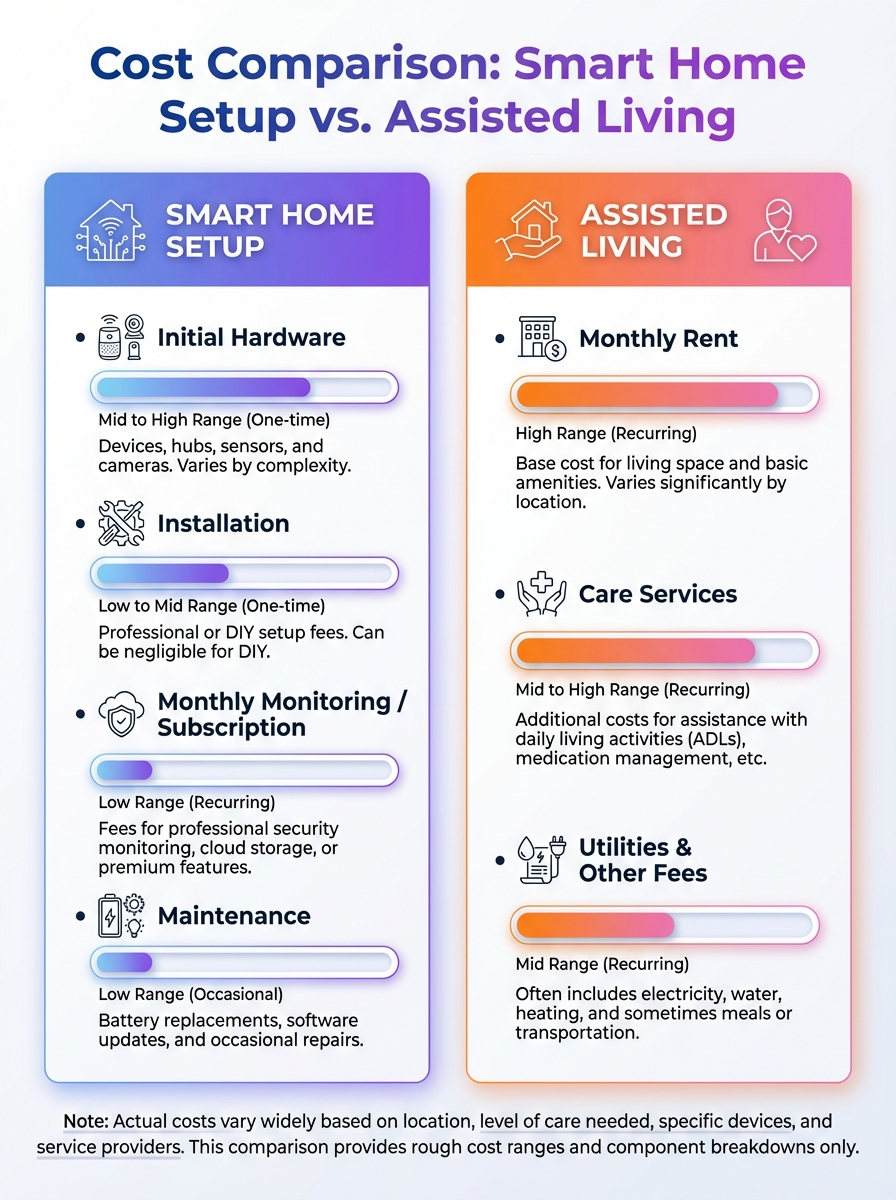
Infographic: Smart Home vs. Assisted Living Cost Comparison.
4. Cost Impact of Fall Detection vs. Facility Supervision
Falls are one of the most expensive and life‑changing events for seniors, and families often feel pressure to move someone to assisted living simply to have someone on site in case of a fall. Smart fall detection at home offers another path, automatic alerts can notify family or emergency services even when no one else is in the house.
Our fall detection devices guide describes wearable options such as smartwatches that can detect sudden movement changes and trigger alerts. While we do not make medical claims, we do see that automatic alerts can shorten the time someone spends on the floor without help, which is a key factor in recovery and future independence.
How Fall Detection Affects Costs
- May delay or reduce the need for facility moves triggered by fear of unwitnessed falls.
- Can reduce caregiver anxiety, which sometimes leads families to choose higher‑cost settings earlier than necessary.
- Provides a safety net at a fraction of assisted living monthly fees.
5. Home Safety Planning vs. Facility “All-Inclusive” Packages
Assisted living markets its care as an all‑inclusive safety environment, but much of that value can overlap with what a well‑designed home safety plan plus smart devices provide. A written plan clarifies who to call, what to do in an emergency, and which daily routines keep someone safe at home.
Our home safety plan for elderly resource explains how to walk through each room, identify fall and fire risks, and record contacts, routines, and device locations. This planning step costs time, not thousands of dollars, and it helps ensure that any smart home investments pay off in real safety benefits.
Why a Home Safety Plan Has Cost Value
- Reduces wasted spending on devices that do not address the real risks in the home.
- Supports aging in place for longer, which can delay high facility fees.
- Makes it easier for multiple family caregivers to coordinate and avoid duplicate services.
6. Smart Security and Lighting vs. Assisted Living Safety Features
One reason families consider assisted living is fear about home break‑ins, wandering, or tripping in dark hallways. Smart security devices and lighting can address many of these worries while the older adult stays in familiar surroundings.
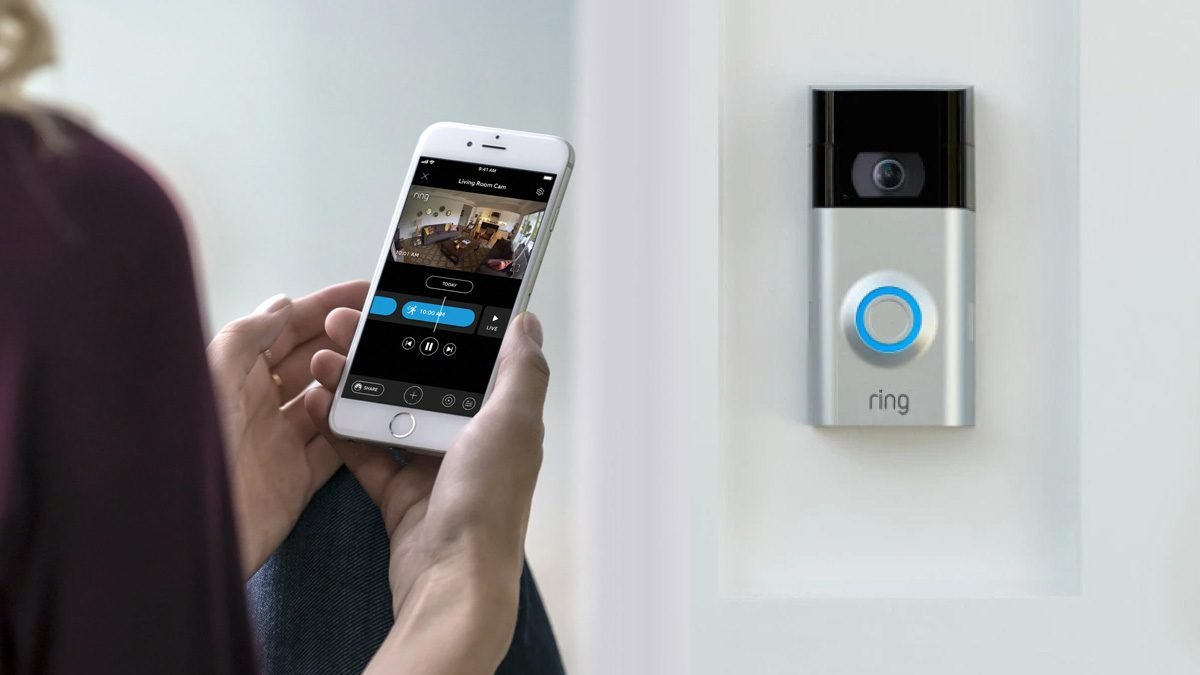
Our home security for seniors section covers smart doorbells, indoor cameras, and simple locks that are designed for older adults. These tools can provide visual verification for caregivers and seniors without complex apps.
Conclusion
Choosing between a smart home aging‑in‑place approach and assisted living is not just a financial decision, it is a balance of safety, independence, and personal preference. National data show assisted living costs at around $70,800 per year, with higher prices in many regions, while a thoughtful smart home setup has a much smaller ongoing cost footprint for many seniors.
Our focus is to help you simplify this choice. By starting with a clear home safety plan, then adding targeted devices for falls, lighting, security, voice control, and medication reminders, you can often extend safe, independent living at home while preserving savings and reducing stress for caregivers.