AI health monitoring is rapidly moving from hospitals into homes, and adults over 50 are leading a quiet revolution in how they manage health, sleep, and nutrition. In late 2025, AI use among adults 50+ nearly doubled from 18% to 30%, and much of that growth is tied to AgeTech tools that watch for early warning signs, personalize routines, and support safer aging in place.
Key Takeaways
| Question | Answer |
|---|---|
| What is AI health monitoring for adults 50+? | AI health monitoring combines sensors, wearables, and software that learn daily patterns, spot anomalies, and send timely reminders or alerts. It often works best when integrated into a broader smart safety setup, such as the guidance in our smart safety devices overview. |
| How does AI support aging in place? | AI tools monitor movement, vitals, sleep, and adherence to medications, then notify caregivers when something looks off. For a complete safety plan, it pairs well with the steps in our home safety plan for elderly guide. |
| Can AI health monitoring work with smart homes? | Yes. Many devices connect to voice assistants and existing sensors, supported by automations like those in our smart home daily routines walkthrough. |
| Is AI useful for medication and nutrition guidance? | AI can remind, log patterns, and flag concerning trends in weight, blood sugar, or appetite. Medication reminders and simple health tools are covered in our medication & health reminders collection. |
| How do caregivers receive AI alerts safely and privately? | Most solutions support tiered access, so family or care teams only see specific data. For privacy considerations, see our advice on checking on an elderly parent with privacy in mind. |
| Which devices are essential to start with? | For most 50+ adults, a combination of a wearable, intelligent fall or motion detection, and emergency alerts offers a strong foundation, aligned with our fall detection devices guide. |
| How do I fit AI tools into an emergency plan? | AI health monitoring should feed into a broader emergency and communication strategy, like the steps in our emergency preparedness checklist. |
1. Why AI Health Monitoring Is Surging Among Adults 50+
In 2024, 71% of non‑federal acute care hospitals reported using predictive AI integrated with electronic health records, and this hospital‑level shift is now informing what older adults expect at home. We see the same pattern on the consumer side, where 50+ tech adoption is increasingly driven by AI features that promise earlier detection, easier communication with caregivers, and more precise lifestyle guidance.
AI health monitoring is not just about step counts or basic heart rate anymore. It now includes fall detection, passive motion analytics, sleep staging, nutrition feedback, and even mood or stress monitoring that runs in the background.

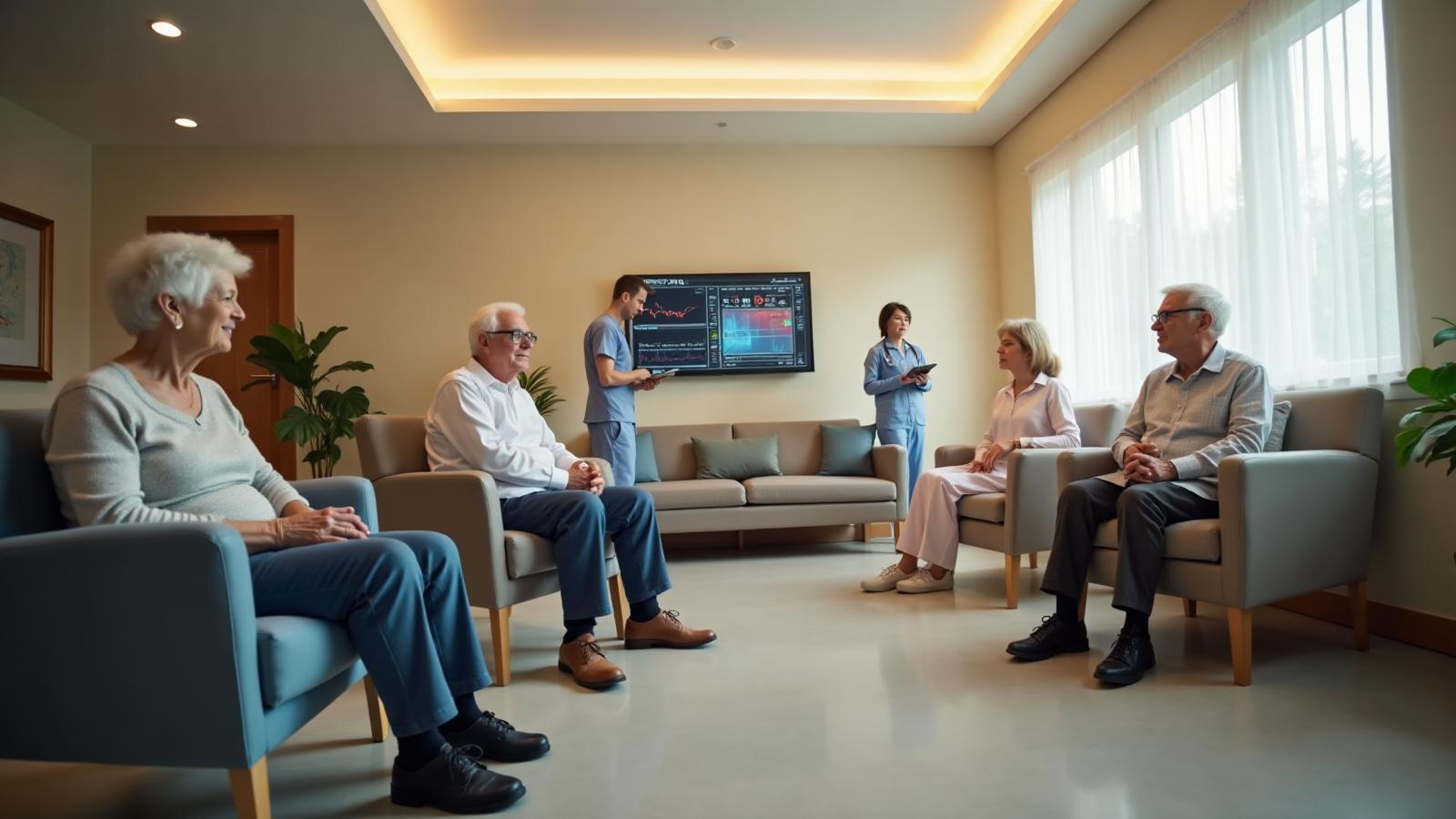
For the 50+ demographic, the appeal is practical. AI can fill gaps between appointments, support chronic conditions, reduce hospital readmissions, and provide peace of mind to adult children who may live across the country.
This momentum is reinforced by CES AgeTech coverage, where nearly every aging‑in‑place concept now has some AI component, from predictive fall‑risk scoring to AI‑driven caregiver dashboards.
2. Core Types of AI Health Monitoring: From Wearables To Ambient Sensing
When we advise families on AI health monitoring, we group options into three broad categories. Each plays a distinct role in daily life and in caregiver decision making.
- Wearables such as smartwatches and rings that track heart rate, heart rhythm, sleep stages, stress, and activity.
- Near‑body devices like smart scales, blood pressure cuffs, and glucose monitors that use AI to interpret trends.
- Ambient sensors such as motion detectors, fall detection systems, and smart cameras that infer health from behavior and movement patterns.
A recent meta‑analysis found that AI‑powered wearables achieved about 85.6% accuracy in detecting stress, which highlights how mature some of these algorithms already are. For adults 50+, that means AI can reliably flag early changes in stress or sleep that may affect blood pressure, blood sugar, or mood.
We encourage families to start by mapping needs: chronic conditions, fall risk, cognitive changes, social isolation, and medication complexity. Then we match those needs to specific AI health monitoring categories, rather than starting with a device and forcing it into a lifestyle.

3. AgeTech, AI, And The New 50+ Tech Adoption Curve
AgeTech used to focus on simple emergency buttons and pill boxes. Now, AI sits at the center of new aging‑in‑place ecosystems that combine safety, health, and daily living assistance into a single experience.
For adults 50+, this convergence matters. Instead of juggling separate devices for falls, sleep, and nutrition, newer platforms aggregate data, then use AI to translate it into clear, prioritized insights for both the older adult and caregivers.
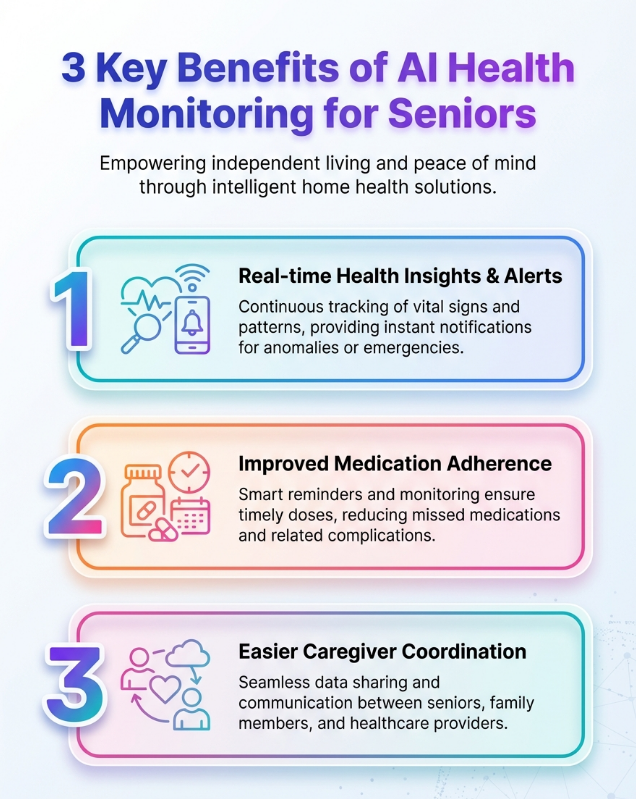
This infographic highlights three major benefits of AI health monitoring.
Late‑2025 research shows that AI adoption among adults 50+ has jumped significantly, and most new use cases relate directly to AI health monitoring, sleep optimization, and nutrition advice. That increase lines up with what we see across our community: once AI tools are set up correctly, older adults often view them as practical supports rather than “more technology to manage.”
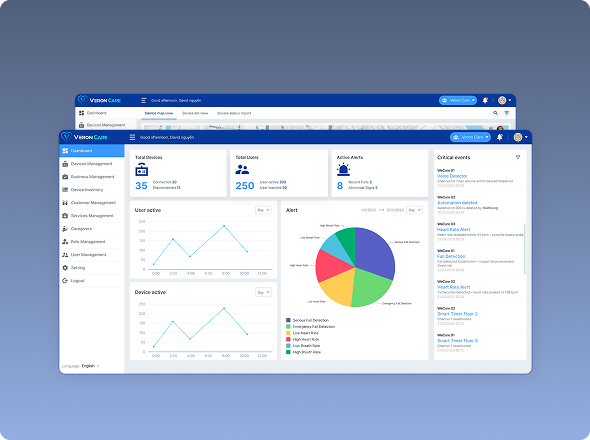

From our perspective, the key to supporting 50+ tech adoption is choosing AI systems with plain‑language explanations, minimal manual input, and clear, human‑readable alerts. Overly complex dashboards quickly discourage both older adults and overwhelmed family caregivers.
4. AI‑Enabled Wearables: Heart, Sleep, And Daily Activity Monitoring
Wearables remain the most visible part of AI health monitoring for adults 50+. Under the surface, many of these devices now run sophisticated AI models that interpret raw sensor streams into actionable health signals.
What AI Wearables Typically Monitor
- Heart rhythm screening for irregular heartbeats and atrial fibrillation.
- Heart rate variability and stress that tie into mood or overexertion.
- Sleep stages, including time in deep, light, and REM sleep, and nocturnal movement.
- Respiratory rate and oxygen saturation for certain devices.
- Activity trends, from simple step counts to gait stability and walking speed.
The Apple Heart and Movement Study, for example, trained AI on more than 2.5 billion hours of wearable data and achieved over 92% accuracy in some prediction tasks when combining behavioral and sensor data. We highlight this not to promote a specific brand, but to show how powerful AI can be when it has long‑term, real‑world data from a 50+ user wearing a device daily.

For buyers, the practical differences often come down to comfort, display readability, and how results are shared with caregivers or clinicians. We advise checking whether the device you are considering can export summaries that primary care teams can actually use.
5. Ambient AI: Fall Detection, Motion Patterns, And Home Safety Signals
While wearables are powerful, many older adults prefer not to wear something all the time. In those cases, ambient AI becomes a critical pillar of AI health monitoring.
Ambient AI uses sensors in the environment to learn daily patterns, such as typical movement between bedroom and kitchen, bathroom visits, time spent out of bed at night, or time spent sitting. Over days and weeks, AI models learn what “normal” looks like for a specific person, then send alerts when patterns change in ways linked to health or safety risks.
- Fall detection devices can combine accelerometers, depth sensors, or computer vision to alert caregivers when a fall is suspected.
- Motion sensors can detect long periods of inactivity, repeated night‑time wandering, or delayed morning activity that suggests a problem.
- Smart safety devices can trigger lights, alarms, or calls when risk thresholds are crossed.

Recent research on AI for real‑time health anomaly detection reports around a 22% improvement in accuracy over older methods when using combined wearable and ambient data. For practical home setups, that means fewer false alarms and better detection of subtle health changes, for example a slow decline in mobility after an illness.
6. AI For Sleep And Recovery: Better Nights, Safer Days
Sleep quality strongly influences balance, mood, and chronic disease management, which makes AI‑based sleep monitoring especially important for adults 50+. Modern systems do more than label light or deep sleep, they detect trends that correlate with falls, cognitive changes, and daytime fatigue.
We see three main approaches in the market:
- Wearable sleep tracking via watches or rings that use heart rate and motion.
- Under‑mattress or bedside sensors that track movement and breathing without direct contact.
- Smart home integrations that adjust lighting, temperature, and noise based on AI sleep insights.
AI health monitoring for sleep can highlight issues such as repeated awakenings, suspected sleep apnea risk, or unusually low recovery after an active day. Care teams can then adjust routines, encourage earlier bedtimes, or discuss medical testing where appropriate.
7. AI Nutrition And Medication Guidance: Daily Micro‑Decisions Made Easier
Nutrition and medication management are two of the most challenging aspects of aging in place. AI tools now help older adults and caregivers manage both without constant manual tracking.
For nutrition, AI health monitoring appears in:
- Smart scales and body composition devices that track weight trends and fluid shifts and flag concerning changes.
- Meal‑logging apps with AI image recognition that estimate calories and nutrients from plate photos.
- Personalized suggestions that tie sleep, stress, and activity data into hydration or meal timing reminders.
Medication support often starts with automated pill dispensers and reminder systems. When combined with AI, these devices can detect missed or late doses, recognize patterns such as repeated omissions on weekends, and send prompts or alerts to caregivers.
8. Integrating AI Health Monitoring With Existing Smart Homes
Many 50+ adults already have pieces of a smart home in place, such as smart lighting, thermostats, or voice assistants. We encourage using these existing elements as a foundation for AI health monitoring rather than rebuilding from scratch.
- Inventory current devices, such as Alexa or Google speakers, motion sensors, doorbells, or thermostats.
- Pick an AI health monitoring “hub” which may be a wearable app, a caregiver portal, or a smart‑home platform.
- Link data flows, so health‑relevant events trigger home automations.
- Test real‑world scenarios, for example what happens when no movement is detected by mid‑morning.
Practical examples include: lights turning on automatically when motion is detected at night, thermostats adjusting based on inactivity or sleep patterns, and voice assistants pushing medication reminders or hydration prompts. All of these can be tied back to AI insights about sleep, activity, or medication adherence.
9. Caregiver AI Tools: Alerts, Dashboards, And Communication
Caregiver AI tools are where separate data streams come together into a single, usable view. These platforms aggregate wearable data, ambient sensor patterns, medication adherence, and sometimes notes from professional caregivers.
Key features we look for when evaluating caregiver AI tools include:
- Customizable thresholds so caregivers only get alerts for issues that matter.
- Multi‑caregiver access, allowing siblings, paid caregivers, and clinicians to see relevant views.
- Plain‑language explanations that translate AI scores into clear “what to watch” guidance.
- Messaging or collaboration tools that tie alerts to actions.
10. Privacy, Consent, And Data‑Sharing Checklists For AI Health Monitoring
AI health monitoring only works when everyone involved trusts how data is collected, stored, and used. Older adults deserve clear, concrete privacy protections, especially as more sensors and caregiver AI tools enter the home.
We recommend walking through a simple privacy checklist before or during installation:
Privacy & Data‑Sharing Checklist
- Identify exactly what data each device collects, such as heart rate, location, video, audio, or motion.
- Confirm whether data is stored locally, in the cloud, or both, and for how long.
- Decide who can view which data, for example only step counts for adult children, but full metrics for clinicians.
- Review how to revoke access or delete data if the older adult changes their mind.
- Turn off or cover cameras or microphones in private spaces, such as bathrooms or bedrooms, unless there is a clear, agreed‑upon need.
Conclusion
AI health monitoring is reshaping how adults 50+ manage health, sleep, and nutrition, and how families support aging in place. From wearables and ambient sensors to caregiver AI tools and smart home integrations, the current generation of AgeTech focuses on real‑world safety, earlier detection, and personalized guidance that older adults can actually use.
Our perspective is straightforward. Start with clear goals, choose devices that respect privacy and independence, integrate them with existing smart home tools, and give caregivers structured, AI‑driven insights instead of raw data. With that foundation, AI health monitoring can become a quiet, dependable partner in daily life for the 50+ community and the families who care about them.