Quick Take: Recumbent bikes offer a supported, seated position ("chair-like") that removes balance risks and joint strain. New "smart" models add motivation through virtual travel and auto-adjusting resistance, making workouts feel less like work.
Introduction: Sitting Down to Stand Stronger
As we get older, the advice from doctors becomes a familiar refrain: "You need to keep moving." We know they are right. Exercise is the golden ticket to maintaining mobility, managing chronic conditions, and boosting cardiovascular health.
But let’s be honest about the obstacles. Traditional exercise can feel daunting. Upright bicycles can feel unstable, treadmills can be hard on the knees, and getting down on the floor for yoga might mean struggling to get back up.
What if the best workout for your body felt remarkably similar to relaxing in your favorite armchair?
Enter the Smart Recumbent Bike.
For the readers of SeniorsSmartHomes, we are looking for technology that enhances life without complicating it. A smart recumbent bike does exactly that. It combines the safety of a supportive, seated position with modern technology that makes exercise engaging rather than a chore.
This guide will walk you through why these machines are the perfect fit for the senior lifestyle, using simple comparisons to explain how the "smart" features actually work for you.
Part 1: Why "Recumbent" Wins for Senior Safety
Before we get to the high-tech bells and whistles, we must establish the foundation of safety. Why choose a recumbent bike over a standard upright stationary bike?
Think of it this way: An upright bike is like sitting on a barstool. You have to balance yourself, your center of gravity is high, and the seat is often small and hard.
A recumbent bike is like sitting in a supportive recliner.
1. The "Step-Through" Design
This is the most critical feature for seniors with limited mobility or balance issues. Upright bikes require you to swing your leg high over the frame like mounting a horse. Recumbent bikes feature a "step-through" frame. There is almost no barrier between the seat and the pedals. You simply walk in, sit down, and slide your feet onto the pedals. It removes the fear of falling before you even begin.
2. The Impact on Your Body
When you sit in a recumbent position, your legs are out in front of you, not below you. This position drastically reduces the pressure on your hips and knees. Furthermore, the seats are wide, cushioned, and most importantly, offer substantial lumbar (lower back) support.
According to the Mayo Clinic, stationary biking is a top choice for those with osteoarthritis because it is a low-impact aerobic activity that minimizes stress on joints while keeping them flexible [1]. The recumbent position is the safest version of that activity.
Part 2: The "Smart" Revolution: Having a Coach in Your Living Room
Twenty years ago, a stationary bike was just pedals and a tension knob. You stared at a wall and counted the minutes. It was boring, and it was easy to quit.
Today, "Smart" bikes use internet connectivity and screens to change the experience entirely. For seniors, this isn't just about flashy gadgets; it's about motivation and guidance.
Here are the three main benefits of "Smart" tech for senior riders, explained simply:
Benefit A: The Virtual Travel Guide (Distraction)
Exercise can be uncomfortable at first. Smart bikes help by distracting your brain.
Imagine your bike has a built-in television screen. Instead of watching the news, this screen connects to the internet and shows you moving video of real-world locations. You can cycle through the streets of Paris, along a beach in Hawaii, or through the Swiss Alps.
When your mind is focused on the beautiful scenery, you focus less on the effort in your legs. Time flies faster, and you end up exercising longer without realizing it.
Benefit B: The Automatic Transmission (Auto-Resistance)
This is perhaps the best feature for seniors who don't want to fiddle with complicated settings.
On an old-fashioned bike, if you wanted a harder workout, you had to manually turn a knob to increase resistance. It was guesswork.
Many modern smart bikes feature "Auto-Adjusting Resistance." Remember the virtual travel mentioned above? If you are riding on screen and you approach a hill in the Swiss Alps, the bike knows it. The pedals will automatically become harder to push to simulate the hill. When you go downhill on screen, the pedaling becomes easier.
It’s like driving a car with an automatic transmission. The bike shifts gears for you, ensuring you get the right workout without ever having to touch a button. You just pedal.
Benefit C: The Gentle Encourager (Virtual Coaching)
Sometimes we don't know how to exercise safely. How fast should I go? For how long?
Smart bikes offer subscription services (like iFit, Peloton, or Zwift) that provide pre-recorded classes led by real instructors. These aren't shouting drill sergeants; many offer gentle, beginner, or senior-focused beginner rides.
Having a friendly face on the screen telling you that you are doing a great job and guiding your pace can provide the companionship and confidence needed to stick with a routine. A study published by the National Institutes of Health noted that older adults using digital health technology for exercise often reported higher motivation due to structured guidance and goal tracking [2].
Part 3: Top Contenders for Your Smart Home Gym
We won't bore you with endless technical specifications. Instead, we will categorize the best options based on how they fit into your life.
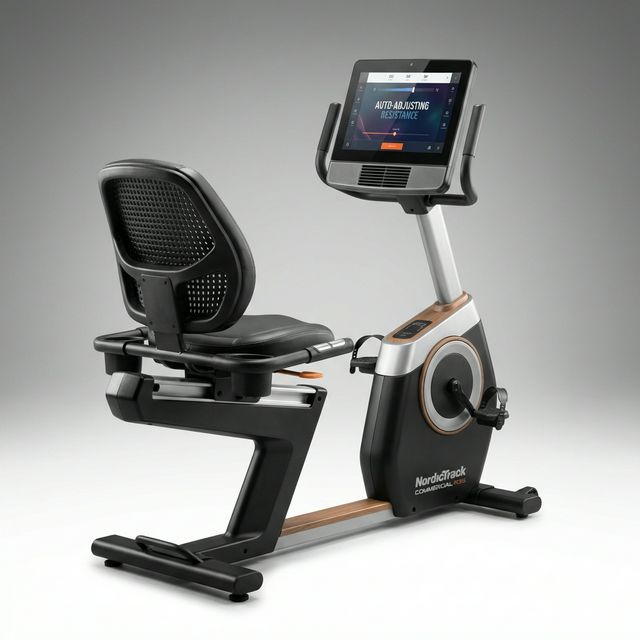
NordicTrack Commercial R35
Why it’s great for seniors: These bikes come with enormous, bright, built-in touchscreens (some as big as 14 inches). They are easiest to see if your eyesight isn't what it used to be. They usually offer the best "Auto-Resistance" features, where the bike handles everything for you.
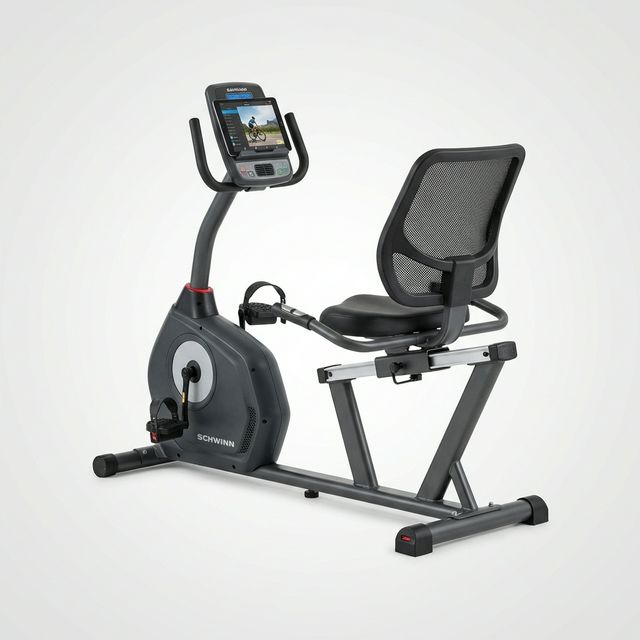
Schwinn 290 Recumbent Bike
Why it’s great for seniors: These bikes are sturdy and comfortable but do not have a built-in TV screen. Instead, they have a sturdy shelf where you place your own iPad or tablet. You connect your tablet to the bike via Bluetooth.
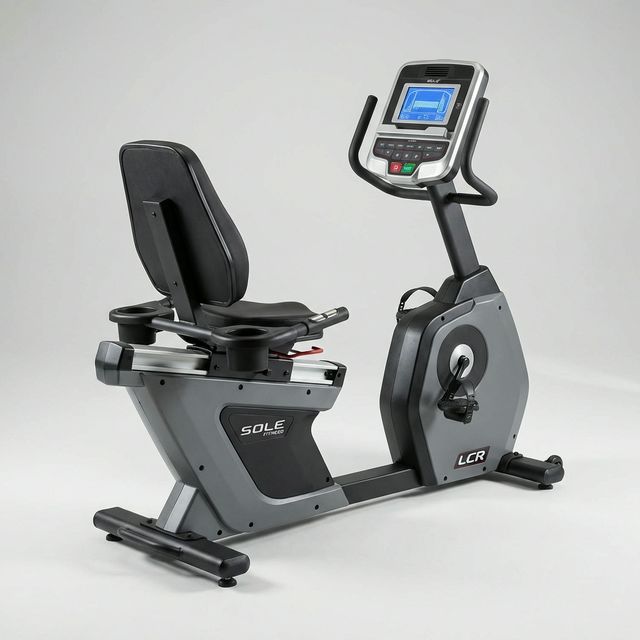
Sole Fitness LCR Recumbent Exercise Bike
Why it’s great for seniors: These prioritize stability above all else. They have heavy frames that will not wobble as you get on or off, offering maximum peace of mind regarding falls. They often have simpler technology that focuses on basic stats rather than flashy videos.
Check availability on Sole FitnessSummary Checklist: What to Look For
- The Low Step-Through: Can you walk through the frame easily without lifting your knee?
- The Seat Comfort: Is it wide, cushioned, and does it support your lower back? (Mesh backs are nice for cooling).
- Screen Readability: Are the numbers large and bright enough to read without squinting?
- Stability: Does the machine feel rock-solid when you sit down?
Conclusion
Integrating smart technology into your home doesn't have to mean complicated robots. Sometimes, "smart" just means a machine that makes it easier to do the things we know we should do.
A smart recumbent bike offers a safe harbor for exercise. It removes the physical barriers of discomfort and instability, and replaces the mental barriers of boredom with engaging, virtual experiences. It’s an investment in maintained independence.
As always, before starting any new exercise routine, consult your doctor to ensure it is appropriate for your specific health profile [3].
Frequently Asked Questions
A: Generally, yes. Recumbent bikes are specifically designed to alleviate back pain compared to upright bikes. Look for models with a contoured, mesh backrest, which provides lumbar support while allowing air to circulate.
A: Not always. If you buy a "Bring Your Own Device" model (like the Schwinn), you can use the basic bike functions without paying extra. However, premium models with built-in screens often require a subscription to unlock video workouts.
A: Recumbent bikes are longer than upright bikes. You generally need a floor space of about 5.5 feet long by 2.5 feet wide. Always measure your space before ordering.
Citations
[1] Mayo Clinic Staff. (2023). Osteoarthritis: Diagnosis & Treatment. Mayo Clinic.
[2] Batsis, J. A., et al. (2023). Feasibility and acceptability of a technology-based exercise intervention in older adults with obesity. National Institutes of Health.
[3] National Institute on Aging. (2024). Exercise and Physical Activity: Your Everyday Guide.