For older adults living independently, a single unnoticed fall or household hazard can change everything, and hybrid sensor setups for fall detection now achieve performance above 90%, giving families far more confidence that someone will notice when something is wrong. Smart environmental sensors offer a quiet layer of protection in the background, using motion, door, and activity data to optimize elder safety without demanding constant interaction.
Key Takeaways
| Question | Answer |
|---|---|
| What are smart environmental sensors for elders? | They are in-home devices like motion sensors, door sensors, and activity monitors that track movement patterns and trigger alerts when routines change. See our overview of smart safety devices for seniors. |
| How do these sensors improve safety without wearables? | Non-wearable motion sensors and room-based detectors passively monitor movement so older adults do not need to remember a device. Learn more in our guide to motion sensors for seniors. |
| Can smart sensors support fall detection at home? | Yes, floor sensors, ambient motion sensing, and integrated systems can assist with detecting falls and inactivity. We compare options in our fall detection devices guide. |
| How do sensors connect to emergency alert devices? | Many setups pair environmental sensing with panic buttons or pagers so alerts go to caregivers or response centers. See examples on emergency alert devices for seniors. |
| Do environmental sensors work with home security? | Yes, they integrate with cameras, smart doorbells, and locks for a complete safety picture. Our home security solutions article explains key combinations. |
| What devices are most essential for elder home security? | We typically recommend doorbell cameras, indoor cameras, smart locks, privacy-friendly sensors, and connected lighting. The 2026 guide to essential home security devices outlines a focused starter set. |
| How can caregivers get visual check-ins safely? | Simple indoor cameras with privacy controls, such as those in our indoor cameras for seniors recommendations, allow respectful remote monitoring. |
How Smart Environmental Sensors Optimize Elder Safety At Home
We see smart environmental sensors as the quiet backbone of a safer home for older adults because they monitor the environment instead of focusing on the person. They track motion, doors, routines, and sometimes sound to highlight unusual patterns that may signal a problem.
These sensors support independent living by reducing the need for older adults to remember wearables or complicated controls. Families get alerts about inactivity, late-night wandering, or missed routine activity without constant phone calls or intrusive check-ins.
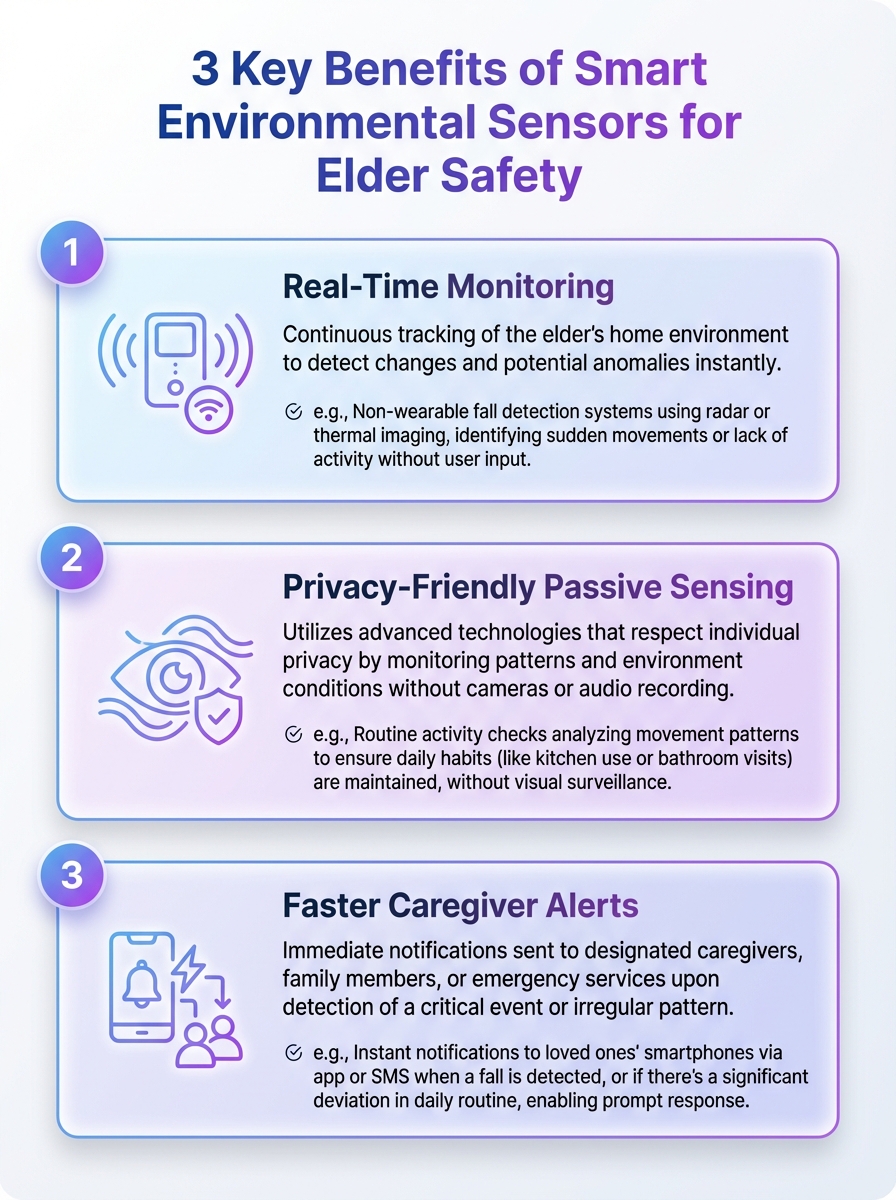
Infographic: 3 key benefits of smart environmental sensors.
From Traditional Alarms To Context-Aware Sensing
Traditional alarms often react only to specific triggers like smoke or intrusion, but environmental sensors add context about how someone moves and lives in their space.
By combining room motion, floor activity, and door status, a home can highlight when something is out of character, such as no movement in the kitchen by a usual breakfast time. This pattern-based view is where sensors begin to truly optimize safety rather than simply signal emergencies.


Non‑Wearable Motion Sensors: Passive Monitoring Without Intrusion
Motion sensors are often the most practical starting point when we design a sensor-based safety plan for elders. They provide passive coverage of hallways, bathrooms, and living rooms while respecting privacy.
Our guide on motion sensors for seniors explains how non-wearable sensors can verify that someone is up and active at expected times. They can also identify periods of inactivity that may indicate a fall or medical issue.
Why Seniors Often Prefer Environmental Motion Sensing
Many older adults resist wristbands or pendants because they feel bulky or stigmatizing, and non-wearable sensors avoid this barrier. Instead of tracking a person directly, the home tracks movement so the elder can live normally without extra devices.
Research on non-wearable sensors reports fall detection sensitivity approaching 89.19%, with other accuracy measures in the 90% range, which is promising for privacy-friendly setups. For families, this provides a strong baseline of protection without altering daily habits.
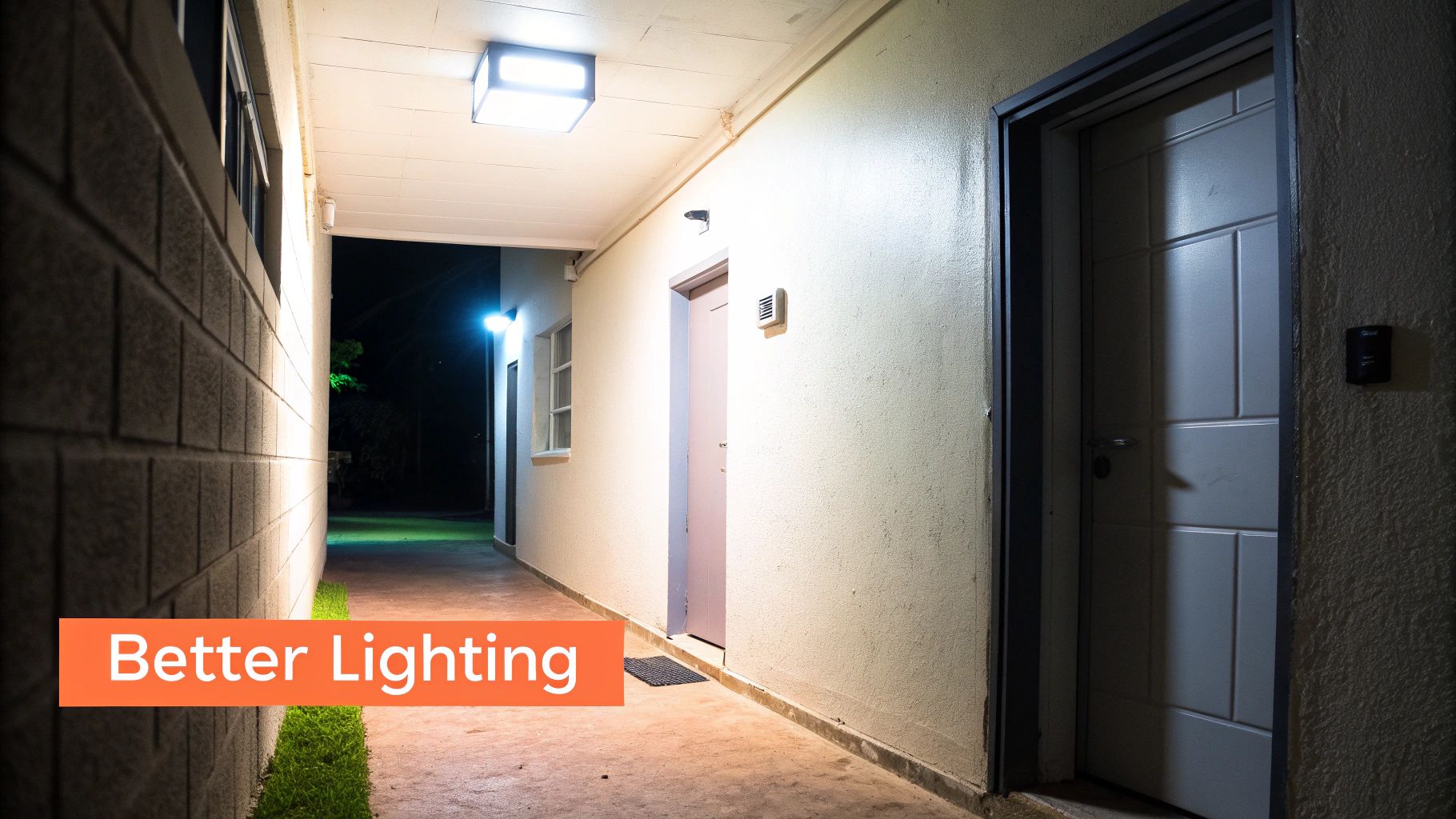
Fall Detection Using Smart Environmental Signals
Falls are a central safety concern for seniors living alone, and environmental sensors can add an important layer of fall awareness. While no system can guarantee detection in every scenario, careful placement of motion and floor sensors can highlight sudden inactivity or unusual movement patterns.
Our fall detection devices guide compares approaches like safety mats, hybrid watch plus sensor setups, and GPS-enabled alarms. We advocate combining environmental signals with at least one direct alert method so there is redundancy.
Safety Mats And Activity-Based Detection
Secure safety mats, placed by the bed or in front of a frequently used chair, can detect step-off events or unexpected absence. When integrated with a home hub, they can send notifications if someone does not return or if there is a sudden event followed by inactivity.
Ambient motion sensors can assist by confirming that there has been no movement in key rooms for a defined period. This approach helps in situations where a wearable may not be charged or worn consistently.
Emergency Alert Systems Enhanced By Environmental Data
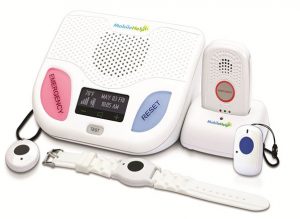
Emergency alert devices give elders a direct way to call for help, and environmental sensors can add context and backup detection. Together, they reduce the chance that a fall or urgent event goes unnoticed.
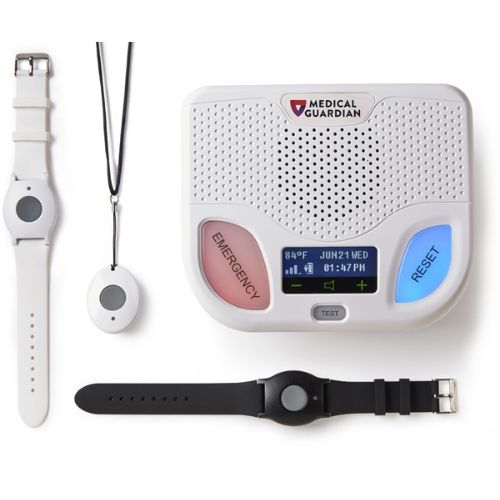
Our emergency alert devices guide compares in-home pagers, wireless call buttons, and smart pagers that send notifications to phones. Integrating these with motion and activity sensors can reduce the load on caregivers while improving responsiveness.
Examples Of Simple, Sensor-Friendly Alert Devices
Wireless personal emergency alarms for elderly users start around $21.99, which is accessible for many families looking for a basic button plus receiver setup. Mid-range Wi‑Fi caregiver pagers, such as some CallToU units around $32.99, can forward alerts through apps when a button is pressed.
More advanced options can be paired with home hubs and activity sensors. This kind of system allows multiple pathways for help requests: manual button press, detected inactivity, and fall-like motion.
Indoor Cameras And Privacy‑Aware Environmental Monitoring
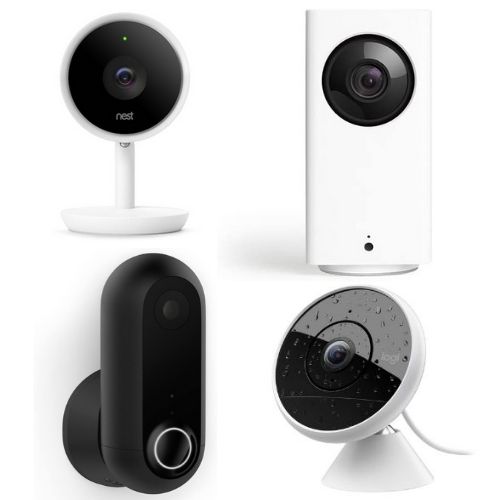
Indoor cameras give families visual confirmation that a loved one is safe, and when combined with motion triggers, they can support quick checks after a sensor alert. We encourage setups that focus on specific rooms, not 24/7 whole-home recording.
Our review of indoor cameras for seniors highlights brands like Ring, Wyze, and Eufy that support remote access plus privacy controls. Features such as geofencing, manual shutter covers, and selective notifications help keep cameras focused on safety, not surveillance.
How Environmental Sensors And Cameras Work Together
A common pattern we use is to let motion sensors or safety mats trigger camera events instead of recording continuously. When the home detects an unusual pattern, a short recorded clip or live view helps caregivers verify what is happening.
This approach respects the elder’s privacy while still using visual data to reduce uncertainty. It also minimizes false alarms, since families can quickly check whether an alert reflects a real concern or a routine change.

Smart Doorbells And Perimeter Sensors For Safer Entry
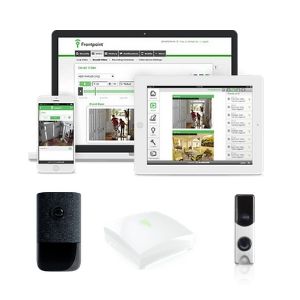
Smart doorbells pair visual checks with motion and ring detection at the front door, which is a critical zone for elder safety. For older adults who move more slowly, these devices allow them to see and talk with visitors without rushing.
Our smart doorbells for seniors guide covers options from Ring, Eufy, and Blink that focus on simplicity. Environmental motion detection at the entry helps identify visitors or deliveries even if the doorbell is not pressed.
Entry Monitoring Without Extra Effort From The Elder
We prefer doorbells that automatically record short clips when someone approaches, since this reduces reliance on the elder hearing or responding quickly. Motion zones help avoid unnecessary alerts from passing cars or pedestrians.
When combined with smart locks and simple routines, doorbell sensors can support remote assistance. For example, a caregiver can verify who is at the door via video, then use a smart lock to let in a neighbor or professional caregiver if needed.

Designing A Privacy‑Respecting Sensor Layout For Elders
When we help families plan sensor layouts, privacy is always central, especially for bathrooms and bedrooms. We often recommend a mix of hallway motion sensors, door sensors, and optional cameras in shared areas while keeping private spaces off-limits for video.
Environmental sensors are particularly useful here because they can detect patterns without capturing images of personal activities. This balance is crucial when older adults value independence and dignity but still want safety support.
Room‑By‑Room Environmental Safety Considerations
- Bedroom: Bedside safety mats, subtle motion sensors near the door, and smart lighting to reduce night-time falls.
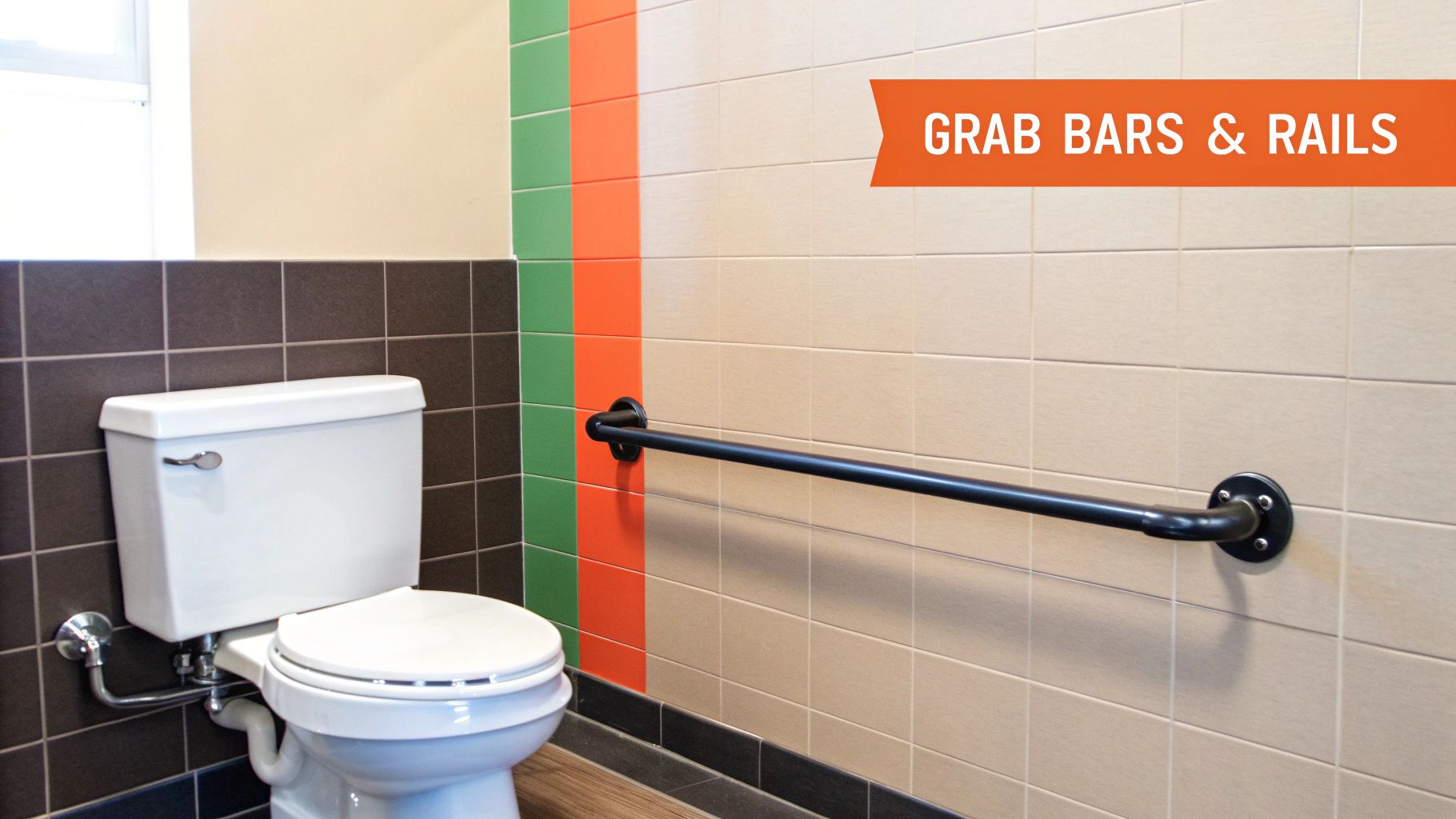
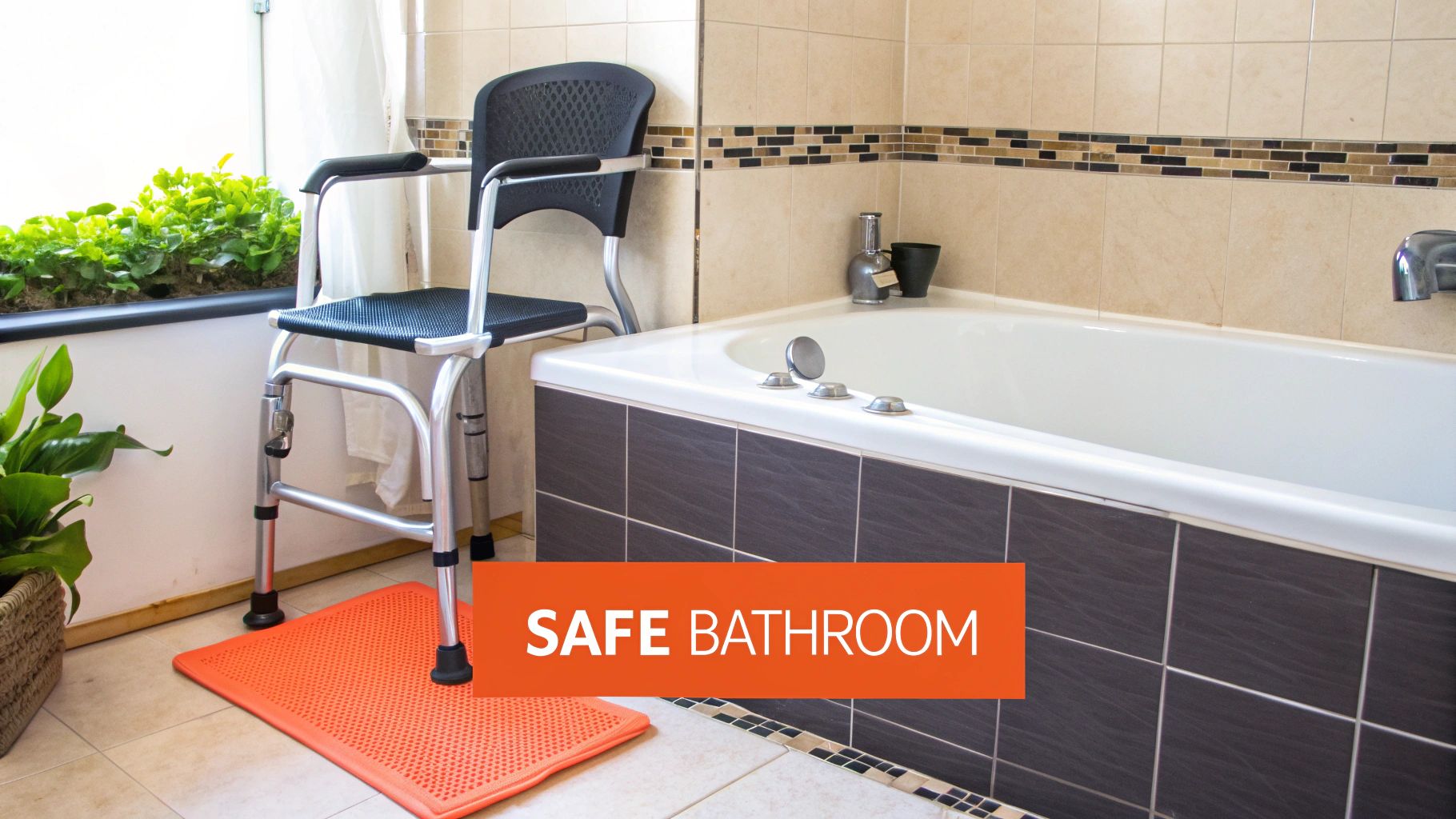
- Bathroom: Door sensors and short-range motion sensing outside the shower area, combined with grab bars and non-slip flooring.
- Kitchen: Activity sensors near the cooking area that, when combined with stove safety devices, help manage unattended cooking risks.

Hybrid Setups: Combining Environmental And Wearable Data
Although we focus heavily on environmental sensors, combining them with a simple wearable often delivers the most reliable safety coverage. Studies indicate that hybrid systems can exceed 90% overall performance in fall detection, outperforming many wearable-only or sensor-only approaches.
Wearables provide detailed motion data and manual SOS options, while environmental sensors fill gaps when devices are forgotten or charging. This layered approach helps minimize single points of failure.
Pros And Cons At A Glance
| Approach | Strengths | Limitations |
|---|---|---|
| Environmental sensors only | Comfortable, private, always in place | May miss rare edge cases or very subtle events |
| Wearables only | Personal SOS, detailed motion data | Relies on consistent wearing and charging |
| Hybrid setup | Redundancy, higher detection performance, more context | More devices to manage, slightly higher upfront cost |
Cost Considerations And Practical Purchasing Tips
We aim to build sensor-based safety setups that are sustainable, both financially and practically. Many core devices, such as standalone wireless personal alarms, are available in the $18.99 to $39.99 range, which keeps initial costs modest.
When combining motion sensors, door sensors, and basic alerts, families can often assemble a functional starter kit for less than the cost of a premium wearable system. The main investment is thoughtful planning and configuration rather than hardware alone.
What To Prioritize First
- Identify high-risk areas like bathrooms, stairs, and bedrooms.
- Install motion or floor sensors in those zones, paired with basic alert devices.
- Add entry monitoring via smart doorbells or door sensors.
- Layer in cameras and wearables only where they add clear, agreed value.
Building A Long‑Term Strategy Around Smart Environmental Sensors
Smart environmental sensors are most effective when we treat them as part of an evolving safety plan, not a one-time installation. As health, mobility, and routines change, sensor placement and alert rules may need adjustment.
Families should review logs and alert history periodically to understand what is working and where false alarms occur. Many systems allow fine-tuning of thresholds, schedules, and zones so alerts reflect real concern instead of everyday variation.
By aligning environmental sensing with the elder’s comfort level and the family’s caregiving capacity, we create a system that supports independence instead of feeling controlling.
Conclusion
Smart environmental sensors optimize elder safety by monitoring the spaces where risk is highest and quietly alerting families when something seems wrong. Instead of relying only on wearables or periodic phone calls, homes can now provide continuous, privacy-aware awareness of movement and routine.
Through motion sensors, safety mats, emergency alert devices, smart doorbells, and selective camera use, we can build layered systems that respect independence while reducing the chance that a serious event goes unnoticed.